Make a Wish Font: Your Handwritten Touch for Real Handmade Products
It started with a candle label. I’d just poured three small lavender-scented soy candles, and the blank white kraft sticker felt too quiet—like something was missing between the minimalist jar shape and the soft scent description. That’s when I opened my font folder, scrolled past the usual suspects, and landed on Make a Wish. Instantly, that warm, bouncy rhythm caught my eye—not overly formal, not too casual, but full of gentle personality, like ink drawn slowly by hand with just the right amount of lift and flow.
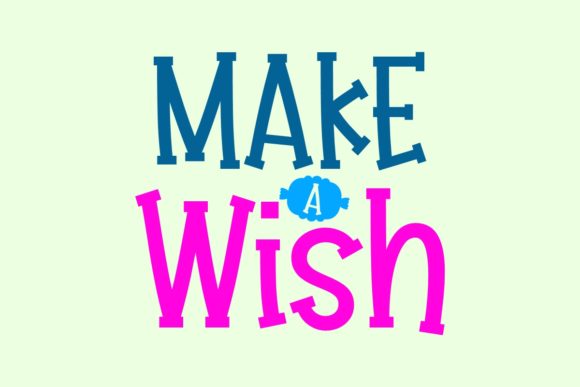
Make a Wish is a script typeface from Script Amp, designed as a free yet thoughtfully crafted font for makers who care about authenticity and charm. Its letters have subtle variation in stroke weight, soft entry and exit strokes, and a natural tilt that feels human—not robotic or over-polished. It’s joyful without being childish, elegant without feeling stiff. Think of it as the handwritten note you’d tuck inside a gift box: personal, intentional, and quietly memorable.
I tested it first on a small 1.5-inch round sticker for a holiday candle set. At that size, the lowercase “a” and “e” stayed legible, and the open counters (the enclosed spaces inside letters) kept the design breathable. For larger applications—like a 5×7 greeting card or a wedding welcome board—the flourishes really shine. The uppercase “W” and “M” have delicate swash-like extensions that add movement without clutter. And because it’s a single-weight script font (no bold or italic variants included), it works best as a display typeface: for names, titles, short phrases, product names, and decorative accents—not long paragraphs or body text.
Here’s where Make a Wish truly comes alive in real handmade work:
- Candle & soap labels: Paired with a clean sans serif like Montserrat or Lato for ingredients or scent notes, Make a Wish gives your brand warmth and approachability.
- Greeting cards & invitations: Use it for names, dates, or short sentiments (“You’re Invited,” “Happy Birthday,” “With Love”). Its friendly energy pairs beautifully with textured paper and soft watercolor backgrounds.
- Printable wall art & planner pages: On digital downloads, it adds instant character to quotes, affirmations, or monthly headers—especially when layered over neutral tones or subtle linen textures.
- Boutique tags & packaging: Printed on recycled kraft tags or belly bands, it elevates even simple cotton bags or gift boxes with handmade sincerity.
- Mugs, tote bags & signs: For vinyl cutting or screen printing, keep letter spacing slightly open and avoid tight curves on very small text—it cuts cleanly on Cricut and Silhouette machines when sized 24pt and up.
One thing I learned early: readability matters most at the point of use. A Make a Wish tag on a tiny tea light needs tighter kerning and simplified phrasing (“Lavender Dream”) versus a large farmhouse-style sign (“Welcome Home”) where you can let the swashes breathe. Always preview your design at actual print size—zoom out on your screen, hold a printed test sheet at arm’s length, or cut a quick sample before batching. What looks lovely at 100% zoom may blur or crowd at 12pt on a sticker.
Font pairing makes all the difference. I often pair Make a Wish with a simple, airy sans serif—something like Poppins or Nunito—for supporting text. Their clean lines let the script shine without competing. If you're going for a vintage mood, try a low-contrast serif like Playfair Display in regular weight—but avoid pairing it with another script font unless you’re intentionally layering styles (e.g., Make a Wish for the headline + a tighter, monoline handwritten font for subheadings). Less is more here: one expressive script, one grounded companion.
Before using Make a Wish commercially—whether on physical products, digital templates, SVG files, or printable bundles—always double-check the license. As a Script Amp font, it’s free for personal and commercial use, but verify if multilingual characters (like accented vowels or currency symbols) are included, and whether ligatures or stylistic alternates are available in your version. Most free fonts don’t include OpenType features, so if you need automatic “fi” or “fl” ligatures for smoother typesetting, test those manually or choose a premium alternative.
I also keep a quick checklist before finalizing any design:
- Is the phrase under 6 words? (Make a Wish sings brightest in short bursts.)
- Will this be cut, printed, or viewed digitally? Adjust size and spacing accordingly.
- Does the background contrast enough? Light script on pale cream works; light script on off-white linen may fade.
- Have I paired it with a neutral, readable secondary font for details like dates, prices, or ingredients?
- Did I test the file format? TTF works across most design tools, but some craft software prefers OTF—check your machine’s compatibility.
What makes Make a Wish special isn’t just how it looks—it’s how it feels to use. There’s a quiet confidence in choosing a font that says “handmade with care” before a single word is read. It doesn’t shout. It invites. Whether it’s guiding a customer’s eye across a boutique shelf, softening the edges of a wedding invitation suite, or adding soul to a digital planner page, it brings consistency and warmth across every touchpoint.
And yes—it’s free. But don’t mistake that for “basic.” In typography, restraint and intention are everything. Make a Wish gives you both: a beautiful, usable script font that supports your voice instead of overwhelming it. It’s the kind of design asset that doesn’t draw attention to itself… until someone pauses, smiles, and says, “This feels like *you*.”