Buckley Handwritten Font for Crafters & Small Shops
As someone who hand-labels small-batch candles, designs printable wedding suites, and cuts vinyl decals for local boutiques, I’ve learned that the right handwritten font isn’t just about aesthetics—it’s about trust, warmth, and clarity at first glance. That’s why Buckley has become my go-to script font in the Script Amp collection. It’s not fussy or overly ornate. It’s simple, natural, and feels like it was written with intention—not algorithmically generated. That authenticity translates directly to how customers perceive your products.
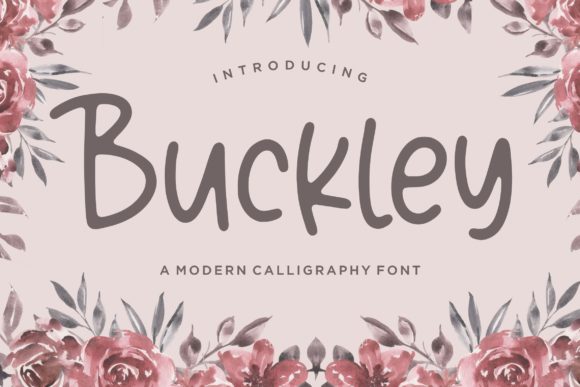
Buckley is a true handwritten font, but one designed for real-world use. Its letterforms have gentle variation—slight thick-and-thin contrast, soft entry and exit strokes, and relaxed spacing—that gives it organic charm without sacrificing legibility. Unlike some expressive script fonts that blur together at small sizes, Buckley holds its shape beautifully on 6mm sticker labels, 12pt product tags, and even printed planner inserts. I’ve used it for lavender-scented candle jars, boutique soap labels, and handmade greeting cards—and every time, customers comment on how “friendly” and “thoughtful” the packaging feels.
For physical product creators, readability is non-negotiable—especially when cutting with Cricut or Silhouette machines. Buckley cuts cleanly at 8–10pt for die-cut vinyl, and its open counters and balanced x-height prevent clogging or breakage in intricate letters like a, e, and s. On matte paper stock, it prints with subtle texture; on glossy sticker sheets, it gains quiet polish. I’ve tested it across inkjet and laser printers, and it consistently renders crisp edges—no feathering, no unintended smudging.
Where Buckley shines most is in projects where personality meets practicality: wedding welcome signs (paired with a light sans serif for names and times), seasonal market banners (“Fresh Honey • Local Farm • June 2024”), and boutique clothing tags (“Hand-dyed • Small Batch • Made in Portland”). It works equally well for a rustic farmhouse sign cut from reclaimed wood and for minimalist digital printables sold as Etsy downloads. Because it’s a display font built for impact—not body text—it’s ideal for headlines, quotes, product names, and short phrases. Think “Small Batch Coffee,” “Thank You So Much,” or “Est. 2021.” Avoid using it for full paragraphs—but that’s exactly how a well-designed script font should behave.
I often pair Buckley with clean, neutral typefaces to ground its expressive energy. For labels and packaging, I’ll use it alongside Inter or Montserrat—a modern sans serif that provides contrast without competing. For wedding stationery, I’ll layer it over a delicate serif like Cormorant Garamond for ceremony programs. The result? A cohesive brand identity that feels intentional, not accidental. Buckley doesn’t shout—it invites. And when paired thoughtfully, it helps your shop stand out in a crowded marketplace without looking trendy or dated.
It’s also versatile across seasons and styles. Last fall, I used Buckley for apple cider label designs—its warmth complemented kraft paper and twine perfectly. Over Christmas, it added handmade charm to gift tag templates (“For Mom • With Love • 2024”). In spring, it softened botanical-themed planner pages and seed packet art. Because it’s rooted in natural rhythm—not rigid geometry—it adapts without losing its voice.
Buckley comes in standard OTF and TTF formats—fully compatible with Canva, Adobe Creative Cloud, Cricut Design Space, and Silhouette Studio. There are no extra swashes or alternate characters listed, which I actually appreciate: it keeps things focused, consistent, and production-ready. No hunting for hidden glyphs mid-project. Just one clean, reliable typeface that delivers what it promises—a genuine handwritten feel, optimized for crafters who need both beauty and function.
If you’re creating SVG files for sale, printable wall art, or editable Canva templates, know this: Buckley includes a commercial font license that covers physical products, digital downloads, client work, and merchandise—including t-shirts, mugs, tote bags, and stickers. That means you can embed it in your PDF templates, convert it to vector paths for cutting files, or use it in social media graphics promoting your shop—all without worrying about compliance. Just keep your license active and avoid redistributing the raw font files.
One thing I always check before committing to a font for product design is how it performs in mockups—and Buckley previews beautifully. Whether it’s a flat-lay photo of a ceramic mug with “Morning Brew” in Buckley, or a lifestyle shot of a linen pouch with a stitched-on tag reading “Handmade with Care,” the font reads as warm, human, and quietly confident. It doesn’t distract from your product—it elevates it. That’s rare. And that’s why it’s now in my core toolkit alongside my favorite cutting mats and pigment inks.
Whether you're designing for your own Etsy shop, crafting custom invitations for friends, or building a full brand identity for a new line of herbal teas, Buckley offers the kind of quiet professionalism that builds recognition over time. It’s not flashy—but it’s memorable. Not loud—but it speaks clearly. And in a world of mass-produced visuals, that kind of sincerity sells.
So if you’re choosing a script font for your next round of labels, printables, or packaging—choose one that supports your craft, not competes with it. Choose Buckley.